Cat Face: A Designer’s Real-World Embroidery Review
First Impressions: Sweet, Simple, and Surprisingly Versatile
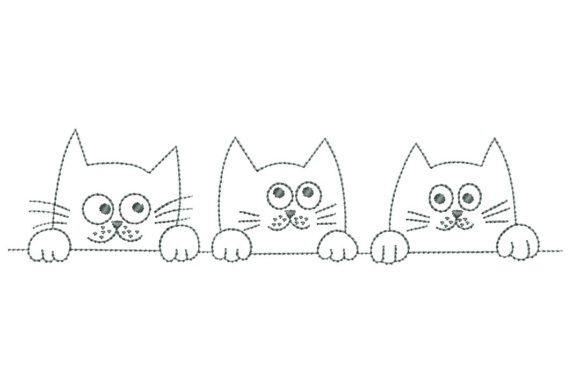
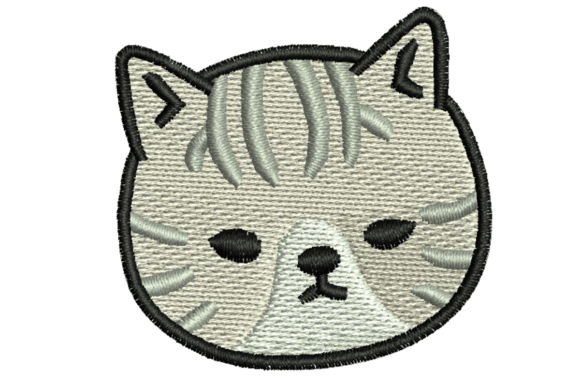
When I opened Cat Face for the first time, I wasn’t expecting much beyond a charming silhouette—but what stood out immediately was its intentional restraint. It’s not overly detailed or cartoonish; instead, it balances soft curves with clean line work, giving it warmth without sacrificing stitchability. The eyes are expressive but not fussy, the nose is a subtle satin stitch triangle, and the whiskers are fine running stitches—not too long, not too sparse. As a designer who regularly tests embroidery files for client-ready apparel and boutique merchandise, I appreciated how Cat Face avoids visual clutter while still feeling full of personality. It reads as handmade, not mass-produced—and that’s exactly what small shop owners and Etsy sellers need when building brand authenticity.
Real-Life Test: A Custom Embroidered Tote Bag for a Local Bakery
Last week, I used Cat Face on a natural canvas tote bag for a neighborhood bakery’s “Cat Lover’s Coffee Club” promotion. We stitched it centered on the front panel, just above the seam, using medium-weight cutaway stabilizer and 40-weight rayon thread. The result? Crisp, confident, and instantly recognizable—even from across the room. Customers paused to smile, point, and ask where the design came from. That reaction matters: in handmade product markets, emotional resonance drives repeat sales and word-of-mouth. Cat Face delivered that quietly, without needing text, borders, or extra embellishment. It worked because it didn’t fight the fabric—it lived *with* it.
Where It Shines (and Where It Needs Care)
Cat Face performs beautifully across several common embroidery use cases:
- Custom apparel: Works cleanly on sweatshirts, t-shirts, and lightweight jackets—especially when paired with a light tear-away stabilizer for knit fabrics.
- Baby embroidery: Its gentle proportions and minimal fine detail make it ideal for onesies and burp cloths—no risk of stiff, scratchy stitching near delicate skin.
- Embroidered patch: Clean outer edges and balanced fill stitch density mean it’ll hold up well when cut, fused, and sewn onto denim jackets or backpacks.
- Holiday embroidery & personalized gifts: Paired with seasonal thread colors (think deep forest green or dusty rose), it adds quiet charm to tea towels, pillow covers, and nursery decor—without shouting over the occasion.
- Small shop product: As a standalone motif on aprons or market bags, it reinforces a warm, approachable brand voice—perfect for craft fairs or local boutiques.
But let’s be practical: Cat Face isn’t magic. It needs thoughtful execution in certain situations:
- Avoid hooping directly on highly textured fabrics like bouclé or thick terry cloth—the whiskers and eye details may blur or skip.
- On dark fabric, test thread contrast first: light grays or creams can disappear unless you add a white underlay (check your embroidery file layers for that option).
- For curved surfaces like caps, confirm whether the design fits comfortably within standard cap hoop sizes—some versions of Cat Face may need slight repositioning or scaling.
- If using it on stretchy fabric (e.g., ribbed baby bodysuits), always pair with a lightweight cutaway stabilizer—running stitches like whiskers won’t hold their shape otherwise.
- Don’t force it into tiny spaces: below 2.5" wide, the eyes and nose lose clarity. Reserve smaller versions for simple applique designs—not dense fill-stitch interpretations.
What It Does for Your Craft Business—Beyond Just Stitching
As an embroidery designer and digital product reviewer, I judge designs not just by how they stitch—but by how they function in the real world of making and selling. Cat Face strengthens customer trust because it looks intentionally crafted, not auto-generated. When buyers see consistent, clean stitching on your Etsy listing or boutique shelf, they assume care went into every step—including your choice of embroidery file. That perception lifts perceived value—even on modestly priced items like kitchen towels or kids’ hats.
It also supports brand consistency. Unlike busy, trend-driven motifs that date quickly, Cat Face has quiet timelessness. You can use it across seasons, product categories, and even color palettes—keeping your shop’s visual language cohesive without repeating the exact same layout. For digital embroidery file sellers, that versatility makes it strong design assets: easy to bundle with coordinating paw prints or yarn balls, or to feature in printable mockups that show range and application.
Designer Notes You Shouldn’t Skip
Before stitching Cat Face into your next project—or listing it in your shop—do these five things:
- Test on scrap fabric first, especially if you’re using a new stabilizer combo or thread brand. Even simple designs behave differently across machines and materials.
- Review stitch density in your embroidery software. If fill areas look overly heavy, consider reducing density slightly—especially for lightweight cottons or baby items.
- Confirm hoop size compatibility for your intended use—whether that’s a standard 4x4 hoop for patches or a larger frame for tote bags.
- Inspect small details at 200% zoom: Are the whiskers distinct? Do the eyes retain shape after stitching? If not, adjust tension or try a finer needle (75/11 works well for most midweight fabrics).
- Check licensing terms before selling finished products or reselling the embroidery file. Since Cat Face is marketed for commercial embroidery and handmade product use, verify whether attribution is required or resale restrictions apply—don’t assume.
Final Thought: A Design That Earns Its Place
Cat Face isn’t flashy—but it doesn’t need to be. In a market saturated with overdesigned, overcomplicated motifs, its simplicity feels like intention, not limitation. It works because it respects the craft: it’s sized right, stitched smartly, and designed for real fabric, real machines, and real people who want to create something meaningful—not just decorative. Whether you’re stitching a one-off personalized gift or building a line of cat-themed nursery goods, Cat Face earns its spot in your embroidery project queue. Just remember: treat it like a collaborator, not a shortcut. Test it. Tune it. Trust it—and then let it do what it does best: connect.