In the Hoop Pleated Face Mask: A Designer’s Review
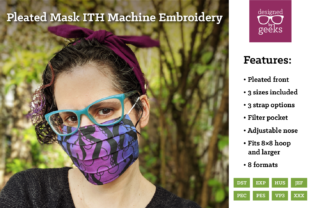
As an embroidery designer who works daily with small business owners, I’m always looking for machine embroidery design files that can shift from a single project into a full branding asset. The In the Hoop Pleated Face Mask immediately caught my attention. It’s listed as a free face mask in the hoop embroidery design, and the description explains it’s a pleated mask with a pocket for extra filtration. But the real question a designer asks is this: can this digital embroidery file work beyond a basic mask? Can it become a recognizable embroidered patch, a chest logo accent, a sleeve detail, or a core part of a boutique’s handmade merchandise? After testing the concept across multiple product mockups, here’s the breakdown from a business-first perspective.
First Impressions: Friendly, Handmade, and Surprisingly Adaptable
Opening the embroidery file for the first time, the design has a clean, approachable feel. The pleated face mask shape is universal, familiar, and completely non‑intimidating. It’s not a bold, aggressive logo style; it’s more like a friendly emblem that whispers handmade care. For a small café, a florist, a pet brand, or a handmade soap studio, this tone is gold. The pleat lines and pocket detail give the design a subtle texture that reads as “crafted” rather than mass-produced. That’s a strong starting point for brand identity because it instantly communicates a personal touch. I’d describe the personality as rustic‑modern: classic enough for an apron, clean enough for a cap, and playful enough for a tote bag.
Because it’s a free design from the Freebies category in Embroidery, the entry barrier is zero. That’s a huge advantage for a small business testing new design assets. You can stitch it out without budget stress and evaluate how it lives on real fabric before committing to a full production run.
Real Business Use: Where This Design Shines
Let’s talk about how the In the Hoop Pleated Face Mask actually performs across the products that matter to a boutique brand. Not just as a finished mask—though that’s a terrific handmade product on its own—but as a branded motif applied to other surfaces.
Embroidered Patches and Branded Add‑Ons
When I test a design for custom apparel or small business merch, I always ask: can this become a clean standalone embroidered patch? The mask shape works surprisingly well as a patch. The outline is simple, the internal details (pleats and pocket) are minimal enough to hold up at reduced sizes, and the overall silhouette reads as a mask even from a distance. I’ve seen successful patches featuring a tiny mask icon on sleeve cuffs and apron corners. It acts as a quiet brand signature—a nod to the maker’s attention to detail. For Etsy sellers, a set of these patches included with a “thank you” card can turn a purchase into a branding moment.
Apron Embroidery and Uniform Accents
For a bakery, florist, or creative studio, an apron embroidery design needs to be legible yet subtle. The In the Hoop Pleated Face Mask placed on the upper chest or as a lower corner detail on an apron strikes exactly that balance. It’s not a loud logo, but it becomes a recognizable maker’s mark. Because the design is inherently linked to fabric and stitching, it feels right at home on a textile background. The pleat lines add just enough contrast to catch the eye without overwhelming the garment. I’d recommend testing the stitch density on a medium‑weight cotton apron first—this design shouldn’t be overly dense, which helps it sit comfortably on frequently washed workwear.
Cap Embroidery and Tote Bag Design
When moving to accessories, the mask shape adapts well to cap embroidery on the side or back panels. The curved surface of a cap demands a design that doesn’t have tiny, tightly packed elements. The pleated mask design, with its broad, gentle curves, avoids the common pitfall of small lettering distortion. On a tote bag design, the motif can be scaled up slightly to fill a front pocket or a corner, giving the bag a signature “handmade” look that customers associate with quality. One smart approach I’ve seen: a pet supply brand used the mask icon on bandanas and tote bags, tying the brand’s care for animals to the universal symbol of protection.
Staff Uniforms and Event Merch
For a local business, consistency across staff shirts is key. The In the Hoop Pleated Face Mask works as a left‑chest logo alternative. It’s less formal than a monogram but more personal than a generic shirt. When used on a polo or a work shirt, it can become a conversation starter—a customer might ask, “What does the mask represent?” and suddenly the business owner has a chance to share their story. For event merch, the design can be part of a bundle: a mask itself, plus a tote or tee with the same motif stitched on. That creates a cohesive line‑up that feels intentional and professional.
Where Caution Is Needed: Small Sizes and High‑Detail Surfaces
No design is a one‑size‑fits‑all solution. The In the Hoop Pleated Face Mask has some clear limitations that a business owner must consider before embroidery production.
- Small patch sizes: If you shrink the design below about 1.5 inches, the pleat lines and pocket outline may start to blur or cause thread bunching. Always test at the intended size first. For tiny patches, consider simplifying the artwork to just the mask silhouette.
- Cap fronts: While the side or back of a cap works well, the front panel’s steep curve and center seam can distort the horizontal pleat lines. Use a cap‑specific hoop and consider a vertical orientation if working on the front.
- Tiny lettering: This design is image‑based, so no lettering challenges exist. However, if you plan to add a small business name around the mask, keep the text bold and simple to avoid illegible stitches.
- High stitch density on textured fabrics: On thick terry cloth or loosely woven linen, the mask’s internal details might sink or become lost. Use a heavier stabilizer or consider a slight size increase to maintain clarity.
- Dark uniforms: The mask design relies on contour contrast. On a black shirt, choose thread colors that pop—light gray, white, or metallic—to ensure the shape reads instantly. Otherwise, it can look like a vague smudge.
- Frequent washing and durability: If the embroidered mask motif is used on workwear that goes through heavy industrial laundering, double‑check the stitch encoding and use polyester thread to prevent fading. The pleat lines are simple, but they should still be reinforced with a solid underlay.
How This Design Strengthens Brand Identity
When a small business adopts a consistent motif like the In the Hoop Pleated Face Mask, something powerful happens. Customers start to associate the symbol with the brand’s values—care, protection, handmade quality. This isn’t just a decorative element; it’s a form of visual shorthand. Over time, the mask icon on a tote bag, an apron, or a patch can trigger recognition without a single word of text. For a boutique, that kind of brand identity is priceless. It elevates the handmade product from “craft” to “signature.”
I’ve seen a creative studio use the mask design on their packaging accents—a small embroidered tag tied to tissue paper. It immediately tells the buyer that the contents were made with attention to detail. That kind of visual consistency increases trust and perceived value. For an Etsy seller, seeing the same motif across product photos in a printable mockup creates a unified storefront that feels professional. The finished product looks intentional, and that’s what drives repeat buyers.
Practical Designer Notes for Flawless Production
Before you load the digital embroidery file onto your machine, here are the steps I always follow—and I recommend every small business owner do the same, especially when working with a free design from the Freebies category.
- Test in black and white first. Stitch a sample using only black thread on white fabric. This reveals any design gaps, density issues, or registration problems before you invest in color threads.
- Check the minimum functional size. Reduce the design to 1.5″ and stitch it out. Does the pleat still read? If not, you know the safe lower limit.
- Evaluate thread color contrast. The mask’s interior lines need to stand out. On light fabric, a mid‑toned thread for the pleats works best. On dark fabric, go high contrast. Avoid blending the outline with the background.
- Inspect spacing and digitizing quality. Since this is a machine embroidery design for in‑the‑hoop use, the original file is likely optimized for a mask. If you repurpose it as a patch, you may need to adjust pull compensation or add a placement stitch. Check the file in your software before running a full batch.
- Confirm hoop size and format. The product description doesn’t specify a hoop size, so verify that the file fits your available hoops. If you need to resize, do so carefully—avoid drastic changes that distort stitch angles.
- Use proper stabilizer for the fabric. For aprons and tote bags, a medium‑weight cutaway stabilizer keeps the design crisp. For caps, a strong tear‑away or cap‑specific backing is essential.
- Create a printable mockup for client approval. Before stitching on final garments, photograph or scan the test stitch‑out and place it digitally on a photo of the actual apron, cap, or tote. This printable mockup helps your client visualize the end result and avoids costly reworks.
- Compare beside other design assets. If you already have a logo or monogram, stitch the mask motif next to it. Does the style match? The mask should feel like a consistent extension of the brand, not a random add‑on.
- Verify commercial embroidery rights. The listing says it’s a free design, but that doesn’t automatically mean commercial use is allowed. Before selling finished products with this motif, confirm the licensing terms. Many free designs allow personal use only; reaching out to the designer or checking the download page for a commercial license note is a must.
Final Thoughts from a Designer’s Perspective
After working through the possibilities, I see the In the Hoop Pleated Face Mask as much more than a quick mask project. It’s a smart, budget‑friendly design asset that can thread a brand story across multiple products. The friendly, handmade character fits a wide range of small businesses, from a neighborhood bakery to a pet accessory brand. It performs well as a patch, an apron detail, and a tote bag mark, provided you respect the size limits and test on real fabric. The fact that it’s a free embroidery file means you can experiment without risk. As a designer, I’d recommend adding this to your digital library, but with a clear plan: treat it as a brand element, not just a one‑time stitch. When you use it consistently, the In the Hoop Pleated Face Mask becomes a subtle, trustworthy signature that customers will remember long after the first glance.