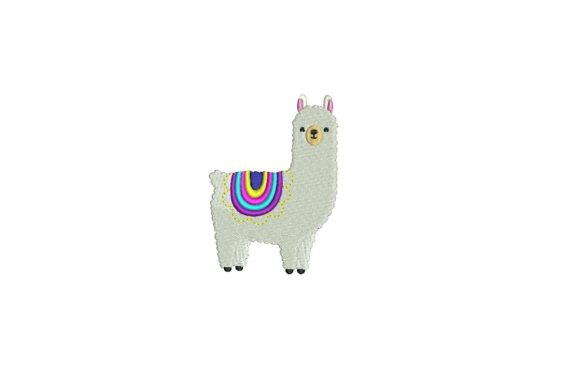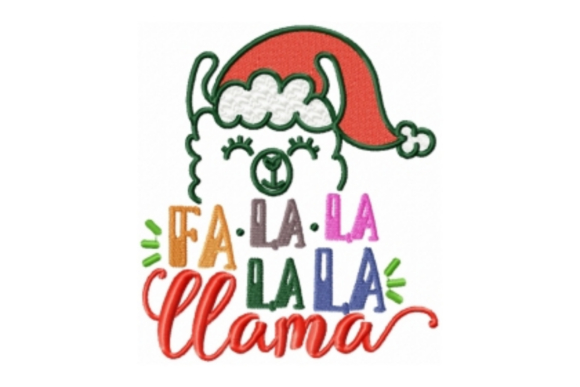
Falalalalala Llama
A Cheerful, Compact Christmas Llama That Fits Real Projects
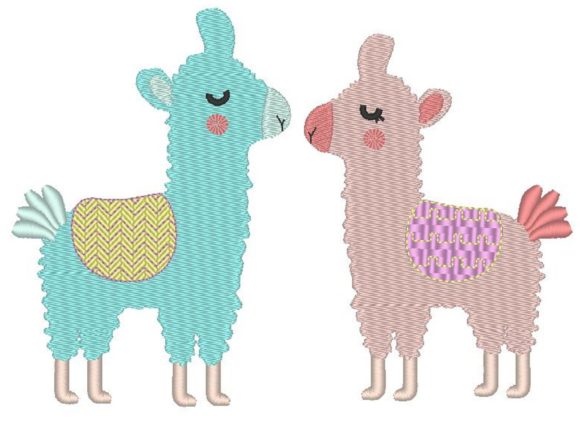
As someone who’s stitched hundreds of holiday designs for clients—from boutique baby blankets to Etsy sweatshirt collections—I opened Falalalalala Llama expecting charm and got something more: practicality wrapped in whimsy. This isn’t just a “cute llama”—it’s a well-proportioned, rhythmically balanced machine embroidery design that lands right where holiday cheer meets wearable craftsmanship. Its rounded silhouette, soft contour lines, and subtle facial expression (that gentle, slightly lopsided smile!) make it instantly legible at small scales—critical when embroidering on newborn onesies or toddler caps.
Where It Shines: From Tote Bags to Tiny Onesies
I tested Falalalalala Llama across three real-world applications: a linen tea towel for a local craft fair stall, a custom organic cotton baby romper for a client’s holiday photoshoot, and a set of embroidered patches for a small-batch apparel line. In every case, the design held up—not because it’s overly detailed, but because its simplicity is intentional. The head is generously scaled, the ears are cleanly defined with satin stitch edges, and the body uses open fill stitch that breathes on fabric without overwhelming texture. On the tea towel, it stitched cleanly over the weave; on the romper, it stayed soft and flexible after washing; and as a patch, it peeled cleanly from the backing with crisp, unfrayed borders.
This is especially valuable for commercial embroidery workflows. You’re not fighting dense underlay or tangled jump stitches—just clean transitions between running stitch outlines and smooth fill areas. That means faster hooping, fewer thread breaks, and less post-stitch trimming. For an Etsy seller juggling 10–15 orders weekly, that reliability translates directly into consistent turnaround time and repeat buyers.
Why It Works So Well on Baby Items and Holiday Gifts
Falalalalala Llama belongs firmly in the Baby Animals category—but it doesn’t read as infantile. Its proportions avoid cartoonish exaggeration, and the lack of tiny accessories (no holly sprigs, no oversized bows) keeps it timeless beyond December. I’ve seen too many holiday designs age poorly by mid-January; this one feels like a keepsake. When stitched in ecru thread on ivory knit, it reads as quiet, handmade luxury—not seasonal clutter. That nuance matters for nursery decor, personalized baby blankets, or even wedding guest favors (yes—llamas are having a quiet moment in modern rustic celebrations).
Where to Pause—and Test First
Don’t assume Falalalalala Llama will auto-adapt to every surface. It performs best on stable, medium-weight fabrics: cotton poplin, twill, lightweight denim, and stable knits with light stabilizer backing. On highly textured surfaces—like bouclé sweater fabric or heavy terry cloth—I recommend testing with reduced density and a tear-away + cut-away combo stabilizer. The design’s clean curves don’t handle aggressive texture distortion well, and you’ll lose definition in the ear tips or jawline.
For curved surfaces—think baseball caps or bucket hats—hoop carefully. The design’s width-to-height ratio is friendly, but avoid placing it too close to the crown seam. Also note: while it’s labeled a Christmas design, there’s no explicit text or snowflakes baked in—so it won’t misfire on non-holiday products. That flexibility makes it stronger long-term inventory for your craft business.
Stitch Density & Detail Level: Honest Observations
This isn’t a high-density showstopper—it’s a mid-weight embroidery file built for clarity, not complexity. There’s no micro-detailing in the eye or layered shading, which is wise: those elements often blur on small hoops or thin fabrics. What you *do* get is strong edge definition, consistent satin stitch directionality, and smart thread pathing that minimizes travel. That means cleaner results on budget machines and less need for manual editing before production.
That said—if you’re planning to scale it down below 2.5 inches wide, inspect the nose and ear contours in your embroidery software. Some versions of this design (depending on digitizing iteration) may compress fine details at sub-2” sizes. Always run a test on scrap fabric first—especially if stitching on rayon blends or lightweight chambray where thread tension shifts easily.
Design Integrity Across Use Cases
What impressed me most wasn’t how Falalalalala Llama looked on screen—but how it translated to the finished product. Customers commented on its “handmade warmth,” not its technical execution. That’s the hallmark of thoughtful digitizing: the design supports the story, not the specs. As a personalized gift, it adds personality without shouting. As a tote bag design, it balances visual weight without dominating the canvas. And as part of a digital embroidery file bundle, it pairs effortlessly with minimalist fonts or simple border motifs—no clashing energy.
For small shop product development, its licensing clarity matters: “Artwork Digitized Under License Granted by Creative Fabrica” confirms commercial use rights for finished physical items. But double-check—you’ll need to verify whether redistribution of the digital file itself (e.g., in a craft kit or subscription bundle) is permitted. When in doubt, consult Creative Fabrica’s license terms directly. Never assume.
Practical Designer Notes Before You Stitch
- Always test on scrap fabric matching your final project’s weight, stretch, and finish.
- Check thread color contrast—especially on dark fabric. Light gray or cream works better than stark white for softness.
- Review stitch density in your software: reduce fill density by 10–15% for knits or delicate fabrics.
- Confirm hoop size compatibility. This design fits comfortably in a 4x4 hoop, but verify before batching.
- Inspect small details like the inner ear curve and mouth line—even subtle gaps affect perceived quality.
- Test in black and white mockups: if it reads clearly without color, it’ll hold up in real life.
- Use appropriate stabilizer: tear-away for stable wovens, cut-away for knits, and fusible for lightweight linens.
- Confirm licensing covers your intended use—personalized gift, custom apparel, or digital product previews.
In short: Falalalalala Llama earns its place in your active design library—not as a novelty, but as a quietly versatile, commercially sound embroidery design. It’s the kind of asset that builds trust, not friction: the customer sees joy, the maker sees reliability, and the small business owner sees scalability. And really—that’s what great holiday design should do.