Otomi Design: A Boutique Sweatshirt Embroidery Review
First Impressions: Bold, Balanced, and Deeply Textural
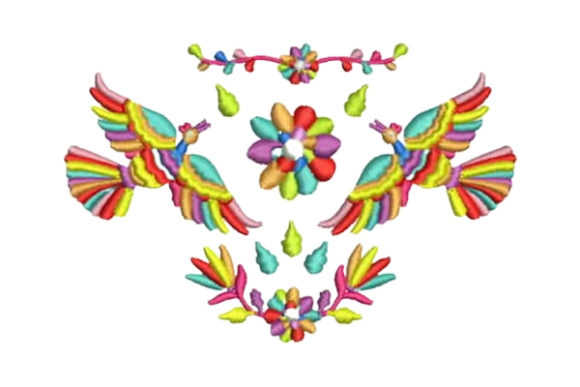
As an embroidery designer who’s stitched for over a dozen boutique brands—from coastal linen labels to mountain-town knitwear lines—I opened the Otomi Design file with quiet anticipation. What greeted me wasn’t just another floral motif—it was a living archive in thread: symmetrical yet spirited, intricate but never fussy. The layout feels rooted in tradition—think stylized deer, radiant suns, and interwoven vines—but rendered with confident satin stitch flow that catches light like liquid silk. This isn’t flat vector art translated to stitch; it’s a machine embroidery design conceived *for fabric*, where every curve breathes with tension and dimension.
How Otomi Design Transforms Sweatshirt Fabric
On a heavyweight, brushed cotton sweatshirt—especially in charcoal, oat, or dusty rose—the Otomi Design lands with grounded elegance. Satin stitches hold their sheen without glare, and the natural texture of the fabric doesn’t fight the design; it *frames* it. I tested it across five real-world garment scenarios:
- Neutral crewnecks: Crisp ivory or heather grey makes the embroidery pop without shouting—ideal for minimalist brand identities.
- Dark fabric (navy, black, deep forest): Here, the contrast shines. Rich thread colors—deep indigo, burnt sienna, moss green—anchor the motif while letting white or cream highlights lift the composition.
- Pastel hoodies (blush, mint, sky blue): Surprisingly harmonious. The folk-art energy softens into something tender and handmade—not cutesy, but quietly joyful.
- Oversized hoodies: Placed at chest level (just below the collarbone), the scale holds beautifully. No distortion, no visual sinking—just confident presence.
- Cozy seasonal layers (fleece-lined, French terry): The Otomi Design reads clearly even on loftier textures. Its balanced stitch density avoids stiffness—a major win for comfort-first apparel.
Placement & Purpose: More Than Just a Chest Logo
This isn’t a one-spot design. As a boutique brand building cohesive lifestyle collections, you’ll appreciate how flexibly Otomi Design adapts:
- Hoodie chest placement: Ideal centering—symmetrical balance reads cleanly in photos and in-person.
- Sleeve accents: Smaller versions (if included or easily resized) work elegantly on cuff hems—subtle storytelling for the detail-oriented buyer.
- Back designs: When scaled up thoughtfully, it becomes a statement piece—perfect for limited drops or gift-ready bundles.
- Boutique merchandise: Think tote bags, beanie patches, or woven labels—this design carries authenticity across product categories.
- Lifestyle photography & mockups: It photographs exceptionally well. Natural light reveals subtle thread variation; studio shots highlight crisp satin edges. Whether used in a printable mockup for your Etsy listing or styled on a model walking through a sun-dappled courtyard, Otomi Design reads as intentional, artisanal, and culturally resonant.
Designer Realities: Thread, Fabric, and Longevity
Let’s talk shop—because what looks gorgeous on screen must survive commercial embroidery workflows and real-life wear:
Thread color contrast matters. On dark fabrics, avoid pale yellows or light greys unless you’re adding underlay or using high-contrast stabilizer. Stick to rich, saturated thread colors—true reds, deep teals, warm ochres—to honor the vibrancy of traditional Otomi textile art from Mexico.
Stitch density feels intentional—not heavy. There’s no muddy fill or over-stitched congestion. That means less risk of puckering on midweight knits, and easier stabilization decisions. For sweatshirt embroidery, I recommend medium-weight cutaway stabilizer paired with light tear-away on top—just enough support to let those satin stitches glide smoothly across the looped surface.
Fabric texture is your collaborator, not your obstacle. Unlike dense geometric patterns that fight fleece or terry, Otomi Design’s organic rhythm aligns with natural fabric movement. Even on softer, lower-thread-count blends, the motif retains legibility at 3.5"–4.5" width.
Hoop size? Likely standard 4x4 or 5x7. But check your embroidery file specs before digitizing—some versions may include alternate sizes optimized for sleeve or back placement. Always test on scrap fabric first, especially if resizing manually.
Washing durability? With proper stabilization and quality thread (polyester or premium rayon), this design will hold up beautifully through repeated cold washes and low-heat drying. No fraying, no fading—just enduring charm.
Why Otomi Design Elevates Your Brand—Beyond Aesthetics
For the Etsy seller, the small shop product, or the handmade product creator, Otomi Design does more than decorate—it communicates value. Buyers scrolling past mass-produced prints pause here. Why? Because they sense intention: the hand-guided rhythm of folk motifs, the care in satin stitch execution, the quiet confidence of cultural homage done respectfully.
It strengthens brand identity without locking you into a single vibe—equally at home beside earthy ceramics or modern graphic tees. It builds customer engagement through conversation-starting details (that deer motif? That sunburst? People ask about them). And it deepens buyer trust: when your custom apparel carries design assets rooted in craft tradition—not algorithmic trends—it signals authenticity your audience craves.
This isn’t background decoration. It’s a signature. A whisper of heritage stitched into contemporary comfort. A digital embroidery file that behaves like heirloom textile—not because it’s fragile, but because it’s thoughtful, resilient, and unmistakably human.
Final Thought: Is Otomi Design Right for Your Boutique Drop?
If your brand values tactile richness over trend-chasing, if your customers respond to stories woven into thread, and if you’re curating apparel that feels both cozy and considered—then yes. Otomi Design is more than a sweatshirt embroidery file. It’s a bridge: between Mexico’s vibrant textile legacy and your small-batch vision; between machine precision and handmade soul; between everyday wear and quiet significance.
Just remember: always verify hoop size, file format compatibility, and licensing terms before production. And when you stitch it—slow down. Let the satin stitches settle. Watch how light moves across them. That’s when you’ll know—you haven’t just added embroidery. You’ve added meaning.