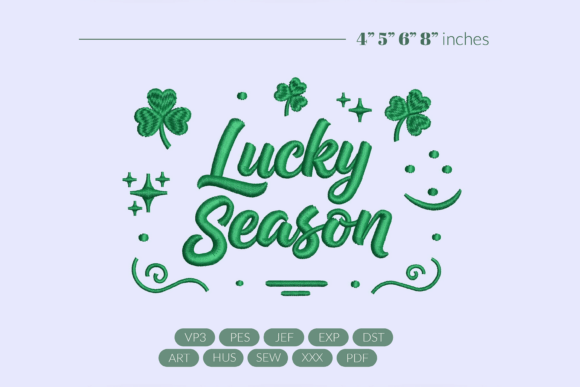
Lucky Season Embroidery Design
There is a certain charm that comes with a design built around the word “lucky.” When I first saw the Lucky Season Embroidery Design on Creative Fabrica, I immediately felt its gentle, celebratory warmth. The smooth script lettering feels effortless and airy, while the tiny clover accents dotting the phrase add a playful, almost whimsical touch. It is not overly ornate, and that is exactly what makes it so versatile. I could already picture it on a soft cream baby blanket, or a crisp linen pillow cover, bringing a quiet, handmade elegance to a St. Patrick’s Day gift or any project that celebrates good fortune.
The visual softness of the design is its strongest asset. The letters flow with a natural, handwritten rhythm, and the clovers are delicate enough to feel hand-drawn rather than mechanical. This gives the finished piece a true handmade spirit, the kind that makes a customer pause and say, “This feels special.” Whether you lean toward a classic, cozy, or modern aesthetic, this design fits right in. It is undeniably seasonal, yet it carries a timelessness that can work for a March baby’s nursery keepsake, an Irish wedding handkerchief, or a family pillow that stays out year-round.
First Impressions and Emotional Appeal
When evaluating any machine embroidery design for gift-worthy projects, I always ask: does it feel personal? The Lucky Season Embroidery Design answers that with a clear yes. The script is not stiff; it almost looks like a calligrapher’s ink on paper. The clover accents are spaced just right—noticeable but not overpowering. This balance makes the design feel sweet rather than childish, and elegant rather than flashy. I can imagine it on a linen tote bag for a friend who loves a touch of Irish charm, or on a set of embroidered napkins for a festive dinner party. It has that rare quality of being both celebratory and understated.
Emotionally, the word “lucky” carries a lot of weight. In a world of personalized gifts, a design that says “Lucky Season” invites the recipient to feel gratitude and joy. It works beautifully on a baby embroidery project, celebrating the arrival of a little one as a “lucky” blessing. For a wedding gift, it can be stitched onto a ring bearer pillow or a keepsake towel, especially if the couple shares Irish heritage or a March anniversary. The design doesn’t shout; it whispers, and that whisper builds a genuine connection. That kind of emotional appeal is what helps an Etsy seller or small shop owner turn a simple product into a meaningful keepsake.
Versatile Projects for Handmade Sellers
One of the first things I do when I open a new embroidery file is mentally run through the list of products it can enhance. The Lucky Season Embroidery Design is remarkably flexible. Here are some of the ways I see it being used for handmade product lines, craft fair tables, and commercial embroidery projects:
- Baby onesies and nursery décor: For a St. Patrick’s Day baby or a March birthday, this design adds a sweet, seasonal touch. Stitch it on a soft cotton bodysuit or a nursery blanket. The lettering is delicate enough to remain gentle against a baby’s skin.
- Embroidered kitchen towels: A set of flour sack towels with “Lucky Season” in green thread makes a charming hostess gift. Pair with a wooden spoon or a clover-shaped cookie cutter for a complete gift box.
- Pillow covers and throw blankets: A cozy family pillow for the living room, or a decorative sham that comes out every March. The script style adds a homey, lived-in feel that works perfectly on textured fabrics like linen or cotton canvas.
- Tote bags and aprons: For a craft fair seller, a simple canvas tote with this design becomes a walking advertisement. It is festive but not overly holiday-specific, so a customer might carry it all spring.
- Wedding and anniversary keepsakes: A handkerchief embroidered with “Lucky Season” and the couple’s initials is a thoughtful gift. It carries a romantic, timeless sentiment that transcends the Irish theme.
- Custom home décor: Frame it in a small hoop as a piece of embroidery art, or stitch it on a table runner for a seasonal dining display. The design’s clean lines make it photograph beautifully for printable mockups and Etsy listing images.
Each of these ideas leans into the emotional core of the design. It is not just about a holiday; it is about the feeling of luck and love that people want to share. That is what makes a personalized gift truly memorable.
Practical Stitch Quality and Fabric Considerations
As an embroidery designer, I always test a digital file with a critical eye. While I haven’t yet stitched this exact design, I can make several practical observations based on the script lettering and the clover accents. The smooth lettering likely has a moderate stitch density—enough to create a clean satin finish, but not so heavy that it distorts lightweight fabrics. The small clover shapes, however, are where you need to pay attention. Tiny details can become a problem if your stabilizer isn’t up to the task, or if you choose a fabric with too much texture.
Here are the key points to keep in mind when working with the Lucky Season Embroidery Design:
- Small lettering and delicate shapes: The script’s thin connectors and the clover leaves may be finely detailed. On a textured towel, like a terry cloth, the threads can sink into the loops and lose definition. Use a topping stabilizer or switch to a smoother, tighter-weave towel to keep the letters crisp.
- Stretchy fabrics: Baby onesies or knit blankets require a cutaway stabilizer that won’t let the design warp after washing. I prefer a medium-weight fusible cutaway for these projects, and I always test on a scrap of the same fabric first.
- Dark fabric and thread color contrast: The design’s charm relies on visibility. A dark green thread on a black background might lose the clover details. I recommend a bright, slightly variegated green thread, or even a metallic gold for a luxe twist. Always thread-paint a small sample before committing to the final product.
- Thick blankets and dense items: If you are stitching on a plush blanket, the script may look squashed if the nap is too high. A smooth, pressed cotton or a low-pile fleece works much better. Hoop carefully, and don’t be afraid to use a temporary adhesive spray to keep the layers stable.
- Washing durability: For anything that will be laundered, secure your thread tails well and choose a polyester embroidery thread that resists fading. The design should hold up beautifully if the stitch density is balanced and the stabilizer is correct.
These are not deal-breakers; they are just the realities of machine embroidery. A thoughtful stabilizer choice and a few test stitch-outs will make the difference between a design that looks professional and one that fails to shine.
Building Customer Trust and Perceived Quality
When you sell a finished product with this design, the emotional value is already there. But the physical presentation seals the deal. The Lucky Season Embroidery Design has a natural, handcrafted look that photographs beautifully under natural light. I can already see it styled with a sprig of fresh clover, a cup of tea, and a soft linen backdrop. That kind of product photography makes a buyer feel like they are purchasing something from a high-end boutique rather than a mass-produced item.
For an Etsy seller or small shop product maker, this design can elevate a simple item into a giftable treasure. When a customer opens a package and sees perfectly stitched lettering that feels personal and warm, they immediately trust your brand. They will come back for every holiday, every baby shower, every wedding. The design’s versatility also means you can offer it in different colorways and on different bases, creating a cohesive collection without needing ten different designs. That consistency builds a recognizable shop aesthetic, which is priceless.
Giftability is another huge factor. A personalized embroidered towel with “Lucky Season” and a name or date feels like a custom order, even if you’ve stitched a few in advance. Because the design is not overly complex, you can add a small monogram or a tiny heart without crowding the hoop. This flexibility lets you offer that “custom embroidery” experience without reinventing the wheel each time.
Practical Embroidery Notes Before You Stitch
No matter how beautiful a design looks on screen, the real test is under the needle. I always follow a few habit steps when working with a new digital embroidery file, and I strongly recommend you do the same with the Lucky Season Embroidery Design:
- Create a test stitch-out on a similar fabric: Don’t risk your final project. Use the same thread, stabilizer, and fabric weight you plan to sell. Check for any gaps in the lettering or puckering around the clovers.
- Check small details after stitching: Look closely at the clover centers and the thin script connectors. If the thread is too thick, the details may blur. A 40-weight embroidery thread is usually a safe bet.
- Compare thread colors: Hold a few green spools against the fabric. A bright emerald reads as festive, while a muted olive feels more rustic. The right shade can change the whole mood of the piece.
- Confirm hoop size and file compatibility: Before you purchase, review the product details on Creative Fabrica. Look for the included hoop size and file formats—this design is listed under Creative Fabrica embroidery, but you need to verify it works with your machine brand. Don’t assume; always check the description.
- Review stitch density: If the design feels too dense for your fabric, most software lets you adjust density slightly. However, altering a purchased file can sometimes void a commercial license depending on the terms, so review the licensing information on Creative Fabrica before making any edits.
- Use the right stabilizer for the fabric: Cutaway for knits, tear-away for wovens, and a water-soluble topping for textured towels. This is embroidery 101, but it makes all the difference in the final product.
Remember, the details on Creative Fabrica—such as exact stitch count, exact dimensions, and file formats—are your best friend. I don’t want to invent numbers here, so I’ll emphasize: before you list this design on a finished product for sale, take five minutes to read through the product page. The commercial license allowance, especially for commercial embroidery use, is typically generous, but you need to confirm it covers your intended sales channel. That small step protects your business and your peace of mind.
Final Thoughts from the Embroidery Frame
The Lucky Season Embroidery Design is one of those finds that feels like a little secret weapon for a handmade business. It is not just a St. Patrick’s Day design; it is a sentiment that can be woven into baby showers, wedding anniversaries, housewarming gifts, and everyday décor. The script is smooth, the clovers are charming, and the overall look is polished yet entirely approachable. Whether you are stitching for a craft fair, a personalized gift order, or your own home, this design has the potential to become a go-to favorite in your embroidery library.
I always tell my students to choose designs that speak to the heart first, and then worry about the technical details. This one passes both tests. With a careful test stitch, a thoughtful thread choice, and a little creative vision, you can turn a simple embroidery file into a finished product that makes someone feel extraordinarily lucky. That, after all, is the whole point of handmade.