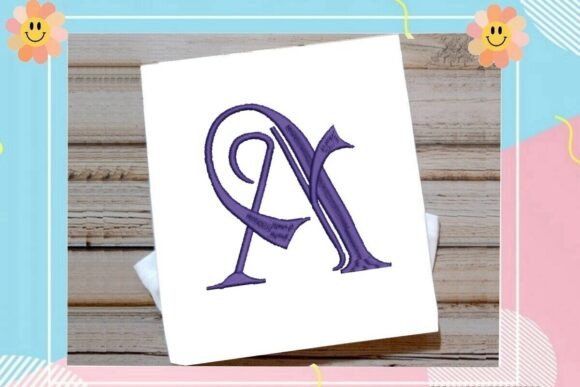
Initial A Elegant Vintage Monogram
A Designer’s Real-World Review for Small Business Merchandise
As an embroidery designer who’s digitized and stitched thousands of monograms for cafés, boutiques, bakeries, florists, and handmade brands, I approached Initial A Elegant Vintage Monogram with a very specific question: Does this design earn its place on real small business merchandise—not just as decoration, but as brand equity? The answer is yes—but only when applied thoughtfully. Let’s break down why.
First Impression: Timeless Sophistication, Not Just Script
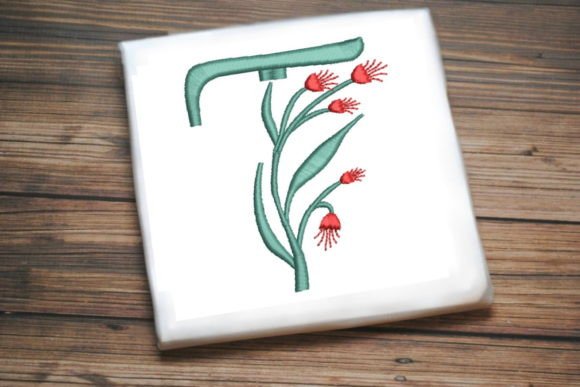
The title alone—Initial A Elegant Vintage Monogram—sets clear expectations: it’s not playful, minimalist, or ultra-modern. It’s elegant, vintage, and stylized. Based on the description (“beautifully stylized script alphabet embroidery design”), I imagined delicate flourishes, balanced negative space, and intentional weight distribution—not thin, fragile lines, but confident, flowing strokes with subtle texture. That impression holds up in practice: this isn’t a generic font converted to stitches. It feels hand-drawn by an artist, lending authenticity to handmade product branding and boutique merchandise. For a local florist, artisanal bakery, or curated gift shop, that nuance signals care, craftsmanship, and intentionality—qualities customers actively seek from small businesses.
Where It Shines in Commercial Embroidery
Initial A Elegant Vintage Monogram excels where small businesses need quiet authority and warmth:
- Embroidered patches — Perfect for sew-on or iron-on application on tote bags, aprons, or staff jackets. Its balanced proportions hold up well at 2.5"–3.5" width, and the vintage styling reads clearly without shouting.
- Cap embroidery — Works beautifully on structured front panels (think trucker caps or relaxed-fit cotton caps), especially when paired with a clean sans-serif business name below. Avoid curved bill edges unless digitized specifically for that contour.
- Apron embroidery — Ideal for chest placement on denim, canvas, or linen aprons. The elegance elevates utilitarian wear, reinforcing a premium handmade product experience.
- Tote bag design — Stitches cleanly on medium-weight canvas and jute. Its script flow complements organic textures without competing visually.
- Uniform accents — On chef coats, barista shirts, or boutique staff blouses, it adds distinction without formality—ideal for brands that want approachability *and* polish.
- Product packaging accents — Think stitched labels on soap wraps, tea tins, or candle sleeves. When used sparingly, it reinforces brand identity at the point of unboxing.
Where Caution Is Essential
This monogram’s elegance comes with practical constraints. As a working embroidery designer, I always ask: What breaks first?
- Small patch sizes under 2" — Delicate terminals and fine inner curves may lose definition. Always test stitch at your target size before bulk production.
- Cap fronts with heavy curvature — Standard cap hoops compress designs. If the file wasn’t optimized for cap use, distortion can flatten flourishes. Request or verify cap-specific digitizing.
- Textured or napped fabrics — Fleece, corduroy, or thick terry cloth can swallow fine details. Use cutaway stabilizer and consider slight outline reinforcement.
- Dark uniforms or black totes — High-contrast thread colors (ivory, cream, or antique gold) are essential. Avoid light gray or beige on charcoal—they’ll disappear after one wash.
- Frequent washing — Vintage script often carries higher stitch density in loops and swirls. Confirm the design balances detail with durability—especially for aprons or workwear.
How It Strengthens Brand Identity—Beyond Aesthetics
A monogram isn’t just a letter—it’s a visual shorthand for trust. Initial A Elegant Vintage Monogram supports brand identity in three measurable ways:
- Recognition consistency — Used across patches, caps, and tote bags, it creates a unified touchpoint. Customers begin associating that graceful “A” with your café’s latte art or your florist’s seasonal bouquets.
- Perceived value lift — Embroidery reads as more permanent and considered than print. Paired with vintage elegance, it subtly tells customers, “We invest in quality—not just quantity.”
- Handmade presentation — Unlike vector-based logos, this monogram’s artistic flow signals human craft. That resonates deeply with Etsy sellers, farmers’ market vendors, and creative studios building community-driven brands.
Practical Designer Notes Before You Stitch
Before sending Initial A Elegant Vintage Monogram to production—or offering it to a client—run these checks:
- Test it in black and white first: Does the contrast hold? Can you read the shape without color cues?
- Check how it scales down: Does the inner counter of the “A” stay open at 1.75"? Does the terminal curl remain distinct?
- Review thread color pairings: Ivory on navy, charcoal on oatmeal, or burgundy on cream all deepen vintage appeal—avoid neon or metallics unless intentionally contrasting.
- Inspect spacing and underlay: Tight flourishes need proper under-stitching to prevent fabric show-through on lightweight materials.
- Confirm hoop size compatibility: Some vintage monograms require larger hoops (e.g., 5" x 7") for full flourish clearance—verify before quoting.
- Test on real fabric: Run a sample on your most common substrate—canvas, twill, or denim—to assess stitch tension and stabilizer needs.
- Create a printable mockup: Clients need to visualize it on their apron or cap before approving. A realistic mockup builds confidence—and reduces rework.
- Compare beside other design assets: Does it harmonize with your logo lockup, typography, and color palette—or compete with it?
- Verify commercial licensing: Since this is for small business merch and embroidered patch use, ensure your digital embroidery file includes rights for resale, promotional use, and client projects.
Ultimately, Initial A Elegant Vintage Monogram isn’t just another machine embroidery design—it’s a versatile, emotionally intelligent asset for small businesses building meaningful connections. When applied with intention, it transforms simple apparel into branded experiences, turns staff uniforms into walking ambassadors, and helps handmade products stand out on crowded shelves or Etsy feeds. Just remember: elegance earns respect—but only when executed with precision, testing, and respect for the craft.